The rapid adoption of artificial intelligence in human-resources management has created new opportunities for streamlining decisions, evaluating applicants, and improving hiring accuracy. However, this digital transformation also brings a significant challenge: algorithmic bias. When hiring algorithms unintentionally favor or disadvantage certain groups, organizations risk undermining fairness, losing valuable talent, and violating anti-discrimination laws. As global employers prioritize hiring equity and strengthen commitments to workforce diversity, measuring and mitigating algorithmic bias has become a critical operational and ethical priority.
AI-powered recruitment tools now influence decisions from resume screening to candidate ranking, skill assessment, and interview evaluation. While these systems can help reduce manual workloads and standardize processes, they may also inherit biases from historical datasets, flawed model design, or unequal representation across demographic groups. Understanding and addressing algorithmic bias is essential not only for compliance but also for building inclusive workplace cultures and attracting top talent.
This article examines the drivers of algorithmic hiring bias, the new methods being developed to measure and mitigate those biases, and the broader implications for organizational recruitment strategies. As industries evolve, responsible AI adoption will be central to creating fair, competitive, and equitable hiring ecosystems.
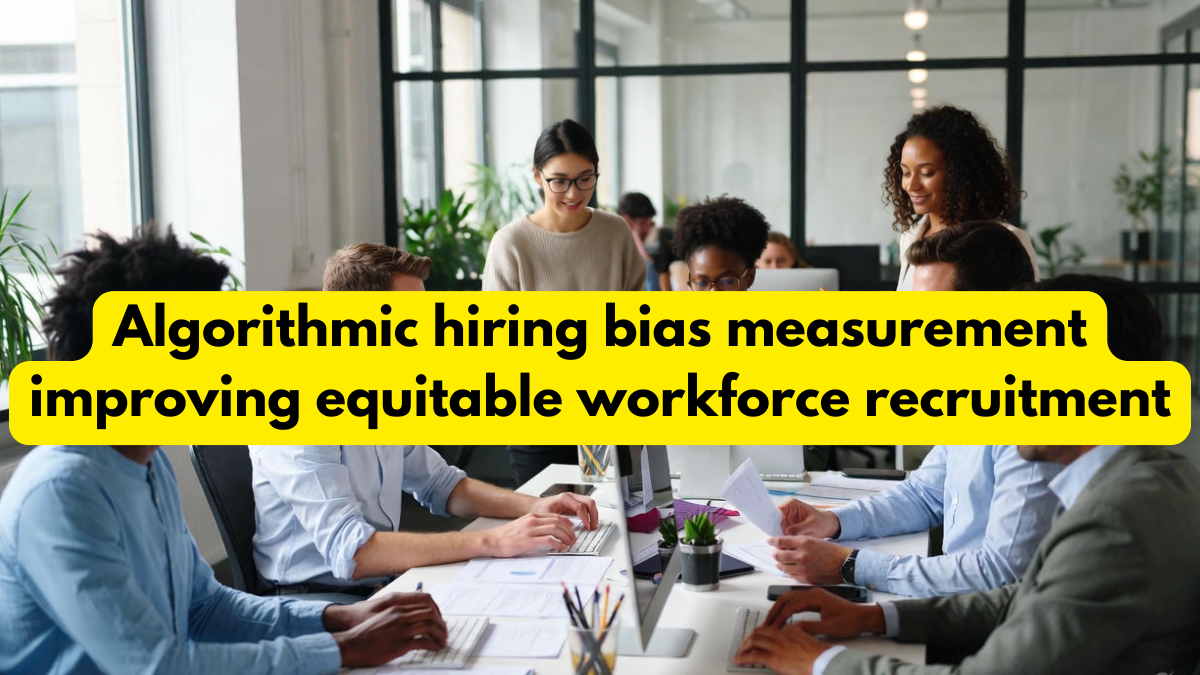
Understanding Algorithmic Bias in Hiring Systems
Algorithmic bias occurs when machine-learning models produce unfair outcomes for certain groups, often due to unequal data representation or biased historical patterns. In recruitment, this may result in systematically lower selection rates for candidates based on gender, ethnicity, age, disability, or socioeconomic background. Because algorithms learn patterns from past decisions, they may replicate discriminatory hiring practices that organizations are actively trying to eliminate.
Improving hiring equity requires identifying the statistical disparities embedded in training data and model predictions. For example, if a company historically promoted candidates from specific universities or backgrounds, algorithms trained on such patterns may continue prioritizing similar candidates. Addressing this imbalance means adopting practices that ensure diverse representation and fairness at every stage of recruitment.
Enhancing workforce diversity also depends on visibility into how AI systems function. Bias detection, transparency reports, and fairness audits help organizations understand whether their digital hiring tools support or hinder their diversity goals. As industries become increasingly dependent on algorithmic decision-making, regular bias evaluation becomes essential to maintaining ethical hiring systems.
Key Methods for Measuring Algorithmic Bias
To strengthen fairness in AI-driven recruitment, organizations are adopting specialized tools and metrics designed to detect and quantify algorithmic bias. These methods help identify disparities early and guide corrective measures.
The table below summarizes common techniques for evaluating algorithmic hiring fairness and their contributions to hiring equity and workforce diversity:
| Bias Measurement Method | Description | Impact on Hiring Equity |
|---|---|---|
| Disparate Impact Ratio | Compares selection rates across demographic groups | Highlights potential discrimination in algorithm outcomes |
| Fairness Through Awareness | Ensures algorithms account for sensitive attributes ethically | Reduces bias by incorporating fairness constraints |
| Equalized Odds Testing | Measures whether error rates differ between groups | Ensures more consistent evaluation across demographics |
| Bias Audits & Transparency Reports | Third-party or internal assessments of AI systems | Promotes accountability and supports workforce diversity goals |
| Synthetic Data Testing | Uses diverse artificial datasets to simulate model behavior | Reveals hidden biases before deployment |
These measurement approaches help organizations identify problematic patterns and make informed adjustments to improve fairness.
Why Algorithmic Bias Matters for Organizational Success
Reducing algorithmic bias is not merely a compliance requirement—it is fundamental to modern workforce competitiveness. When hiring algorithms inadvertently filter out qualified candidates, companies lose access to diverse perspectives, innovative thinking, and broader talent pools. Promoting workforce diversity leads to better problem-solving, stronger team performance, and improved customer understanding.
Bias-free algorithms also support hiring equity by ensuring every candidate is evaluated based on skills and merit rather than demographic attributes. Fairness in hiring strengthens employer branding, improves employee morale, and enhances long-term retention. As job seekers become more aware of AI-driven recruitment processes, transparency and fairness become increasingly important in attracting top talent.
Additionally, reducing bias minimizes legal risks. Regulatory bodies worldwide are introducing new rules requiring fairness audits, algorithmic transparency, and accountability in automated hiring systems. Organizations that fail to measure and address algorithmic bias may face penalties and reputational damage.
Challenges in Achieving Fair AI Hiring Systems
While the need to address algorithmic bias is widely recognized, several challenges complicate implementation. One major difficulty is incomplete or imbalanced data. If certain groups are underrepresented in training datasets, algorithms may not learn accurate patterns for evaluating those candidates. Achieving hiring equity requires carefully curated datasets that reflect the diversity of the applicant pool.
Another challenge is that fairness metrics can conflict with one another. For example, optimizing equalized odds may reduce accuracy, while maximizing accuracy may worsen fairness disparities. Organizations must balance performance with ethical considerations to ensure responsible recruitment practices.
Technical complexity also poses barriers. Measuring and mitigating bias requires expertise in data science, statistics, and regulatory compliance. Smaller organizations may lack the resources to conduct comprehensive fairness audits, making them more vulnerable to biased AI outcomes. Despite these challenges, adopting responsible AI frameworks is essential for improving workforce diversity and ethical hiring transformation.
Strategies for Reducing Algorithmic Hiring Bias
To address algorithmic bias, organizations are implementing a range of strategies. Data diversification is a critical first step, ensuring that training sets include candidates from multiple demographic backgrounds. This helps algorithms learn more accurate and inclusive patterns.
Another approach involves incorporating fairness constraints directly into model design. Tools such as adversarial debiasing, fairness-aware optimization, and regularized training help reduce disparities in evaluation metrics. Transparency is also essential. Companies increasingly publish fairness reports and participate in independent audits to demonstrate a commitment to hiring equity.
Policy frameworks play an equally important role. New regulations require algorithmic accountability, bias testing, and public disclosure of automated hiring tools. These guidelines help standardize practices across industries and promote broader workforce diversity initiatives. By integrating governance, technology, and ethical standards, organizations can build recruitment systems that reflect their values and support long-term success.
The Future of Fair and Inclusive AI in Hiring
Looking ahead, advancements in explainable AI, privacy-enhancing technologies, and standardized fairness protocols will further improve the measurement and mitigation of algorithmic bias. As organizations adopt more sophisticated tools, hiring systems will become more transparent, interpretable, and inclusive.
The future of recruitment will likely combine algorithmic intelligence with human oversight, ensuring that fairness remains a central priority. Companies that invest in equitable AI systems will gain a competitive advantage by appealing to diverse global talent. These efforts will also strengthen hiring equity and foster organizational cultures rooted in respect, innovation, and ethical responsibility.
As global workforces become more diverse, the ability to support fair AI-driven hiring will be indispensable. Organizations that embrace responsible AI governance today will be best positioned to thrive in tomorrow’s digital employment ecosystem.
Conclusion
Algorithmic bias presents a significant challenge for modern hiring systems, but it also offers an opportunity for meaningful improvement. By prioritizing fairness measurement, implementing bias mitigation strategies, and reinforcing hiring equity standards, organizations can build recruitment pipelines that support robust workforce diversity and ethical decision-making. As AI continues shaping the future of work, responsible management of algorithmic systems will be essential to ensuring equitable and inclusive employment practices.
FAQ
What is algorithmic bias in hiring?
It refers to unfair or discriminatory outcomes produced by AI systems when evaluating job candidates.
How does algorithmic bias affect hiring equity?
It can lead to unequal selection rates and limit opportunities for underrepresented groups, reducing fairness.
Why is workforce diversity important in algorithmic hiring?
Diverse teams improve innovation, performance, and organizational adaptability.
How can companies measure algorithmic hiring bias?
Through methods such as disparate impact analysis, fairness audits, equalized odds testing, and synthetic data simulations.
Can algorithmic bias be eliminated completely?
It can be significantly reduced, though continuous monitoring and responsible AI practices are necessary to maintain fairness.
Click here to know more.