The modern definition of success is undergoing a profound transformation. Increasingly, individuals are choosing experience over possessions, signaling a cultural shift away from material accumulation and toward meaningful living. This movement is not simply about reducing clutter but reflects deep changes in consumer psychology, emotional priorities, and evolving spending habits. As people navigate fast-paced lives filled with digital overload, experiences offer something material goods cannot: connection, memory, and personal growth.
The appeal of experience over possessions stems from a growing awareness that happiness does not reside in ownership but in lived moments. Travel, education, wellness retreats, and creative pursuits now outrank luxury items in personal value. Through this lens, minimalism emerges as more than an aesthetic trend; it becomes a lifestyle rooted in intentional choice. By reevaluating spending habits, individuals align their financial decisions with emotional fulfillment and long-term satisfaction.
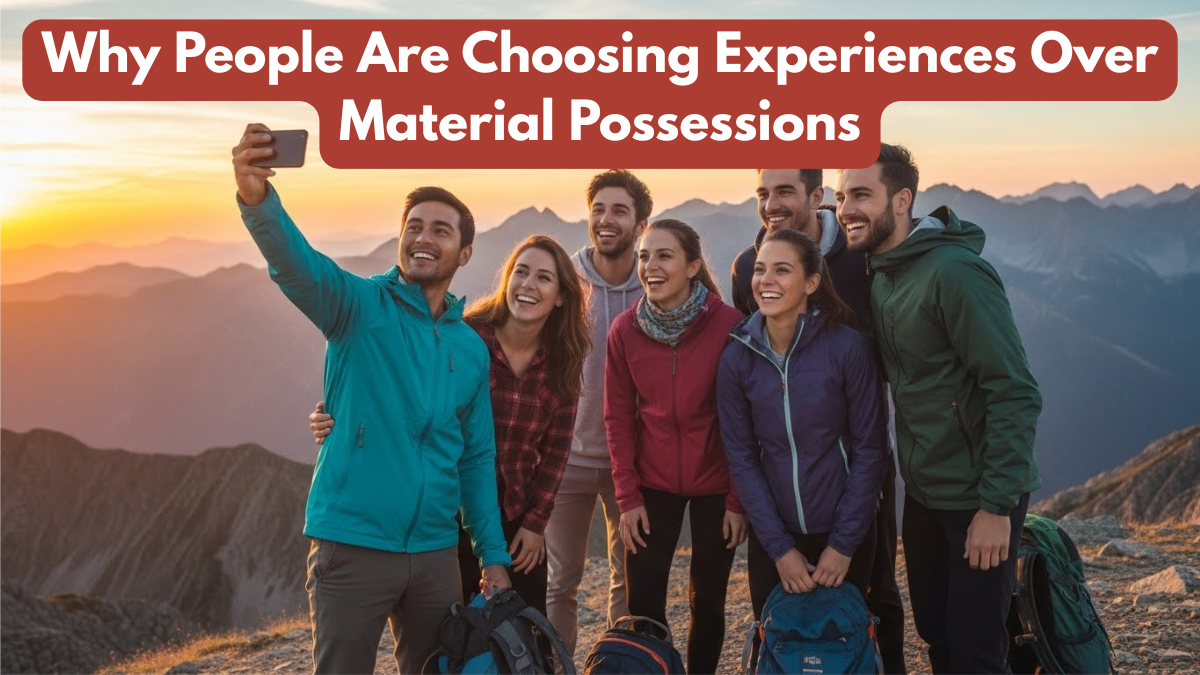
The Psychology Behind Experiential Living
Modern consumer psychology explains why experience over possessions resonates so strongly. Research shows that experiences generate longer-lasting happiness than physical goods because they become part of personal identity. Unlike possessions, which quickly lose novelty, experiences deepen through reflection and social sharing. This psychological reinforcement encourages people to prioritize activities that foster growth and connection.
Minimalism further amplifies this effect. By reducing unnecessary belongings, individuals create space — both physical and mental — for experiences that truly matter. As people reassess their spending habits, they discover that investing in travel, learning, and relationships yields greater emotional returns than accumulating objects.
Economic and Social Influences
Economic pressures also drive the preference for experience over possessions. Rising housing costs, student debt, and economic uncertainty make long-term financial planning more important than ever. Instead of committing resources to depreciating assets, individuals focus on enriching life experiences that contribute to well-being and adaptability.
Social media amplifies this shift. Platforms showcase moments rather than merchandise, reinforcing the cultural appeal of experiences. This feedback loop influences consumer psychology, shaping aspirations and redefining success. In this environment, minimalism becomes both a practical and emotional strategy, while thoughtful spending habits become markers of personal wisdom.
Comparison of Possession-Based vs Experience-Based Lifestyles
| Aspect | Possession-Based Lifestyle | Experience-Based Lifestyle |
|---|---|---|
| Core value | Ownership | Experience over possessions |
| Emotional fulfillment | Short-lived | Long-lasting |
| Role of consumer psychology | Desire-driven | Meaning-driven |
| Influence of minimalism | Low | High |
| Financial focus | Acquisition | Intentional spending habits |
| Life satisfaction | Variable | Consistently higher |
This comparison illustrates why the shift toward experience over possessions continues accelerating worldwide.
The Impact on Well-Being and Identity
Choosing experience over possessions reshapes personal identity. People become defined not by what they own but by what they do, learn, and contribute. This fosters resilience, creativity, and deeper relationships. Through this lens, minimalism provides clarity, freeing individuals from the pressure of constant consumption.
Health and well-being improve as stress decreases and life satisfaction rises. Experiences encourage mindfulness, presence, and emotional richness. As consumer psychology evolves, individuals recognize that happiness thrives in connection, not accumulation. Adjusting spending habits accordingly becomes a pathway to long-term fulfillment.
The Future of Consumer Culture
The global economy is adapting to this shift. Businesses now emphasize experiences, services, and personalized offerings. The tourism, wellness, education, and entertainment sectors flourish as consumers seek memorable engagements. This transformation reflects a new era of consumer psychology where emotional value outweighs material ownership.
Minimalism continues influencing product design, marketing strategies, and lifestyle choices. Meanwhile, evolving spending habits reinforce financial responsibility and environmental sustainability. Together, these trends ensure that experience over possessions remains central to modern living.
Conclusion
The movement toward experience over possessions represents a powerful redefinition of happiness, success, and purpose. Rooted in evolving consumer psychology, supported by minimalism, and reflected in changing spending habits, this shift encourages people to live more intentionally. As society continues embracing experiential living, the future of fulfillment lies not in what we own but in what we experience.
FAQs
Why are people choosing experience over possessions?
Because experiences provide deeper emotional fulfillment, align with modern consumer psychology, and support healthier spending habits.
How does minimalism influence this shift?
Minimalism reduces unnecessary consumption, making space for meaningful experiences.
Can experience-based living improve happiness?
Yes. Choosing experience over possessions consistently increases life satisfaction and emotional well-being.
Will this trend continue growing?
Absolutely. As consumer psychology evolves and spending habits change, experiential living will remain a dominant cultural force.
Click here to know more.