As global economies continue to evolve toward technology-driven industries, expanding opportunities for science, technology, engineering, and mathematics education has become essential. STEM kits have emerged as powerful tools for hands-on learning, helping students develop practical skills, creative problem-solving abilities, and stronger confidence in technical fields. These kits are particularly impactful in underserved communities where access to laboratory equipment, digital tools, and structured learning resources is often limited. By integrating education access initiatives with modern open hardware innovations, STEM kits are reshaping the learning landscape and empowering students with the skills needed for future careers.
The rise of open-source technology has made it easier for educators, researchers, and nonprofit organizations to develop affordable and customizable kits that encourage exploration and experimentation. Traditional STEM resources were once costly and inaccessible, but open-hardware designs have democratized the ability to learn electronics, robotics, coding, engineering principles, and scientific measurement. This shift not only closes educational gaps but also invites students from diverse backgrounds to participate in high-impact, hands-on STEM experiences.
This article explores how STEM kits are revolutionizing learning, the role of open hardware in expanding access, and how these tools support long-term educational equity across communities worldwide.
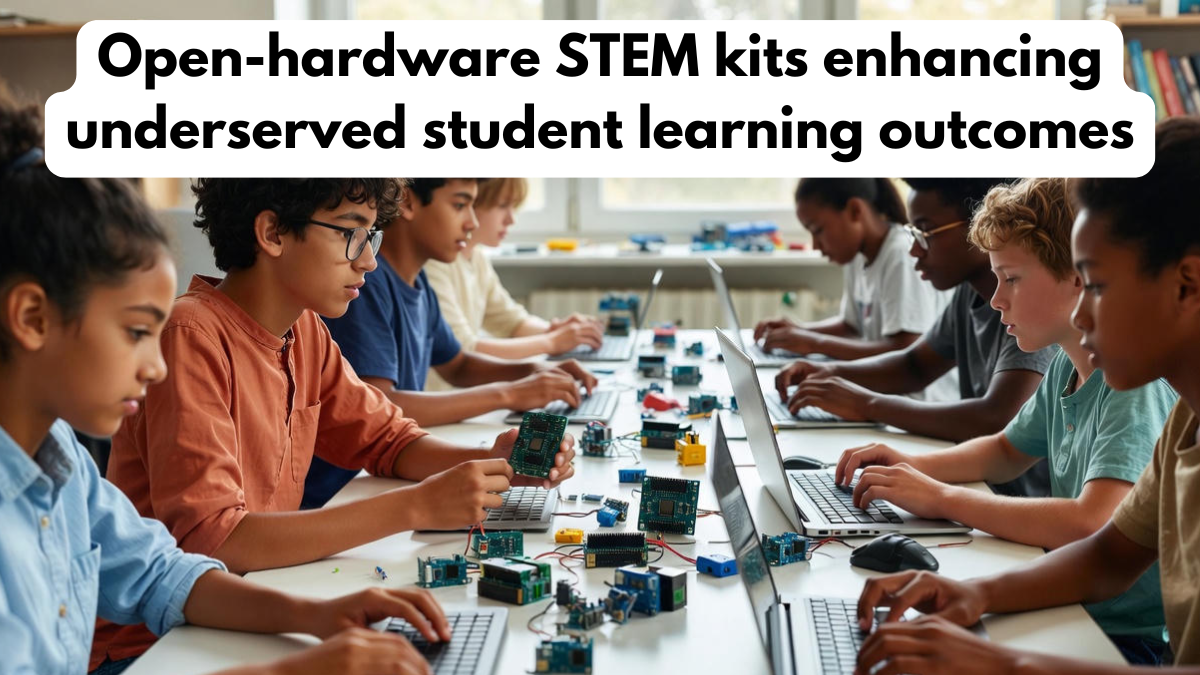
The Importance of STEM Kits in Modern Education
STEM kits support experiential learning, allowing students to apply theoretical concepts through real-world activities. Unlike passive forms of instruction, hands-on kits engage students by encouraging experimentation, problem-solving, and creativity. These experiences are crucial for building foundational knowledge in fields such as robotics, coding, chemistry, physics, and engineering.
In underserved regions, where schools may lack modern laboratory infrastructure, STEM kits provide an accessible alternative. By enhancing education access, these kits help bridge resource gaps and support teachers who may not have specialized training in STEM subjects. Students gain exposure to advanced concepts at a young age, increasing the likelihood that they pursue technical paths in their future careers.
Furthermore, incorporating open hardware elements ensures that STEM kits remain adaptable and affordable. Open-source designs allow educators to modify tools, customize lessons, and share improvements globally, promoting collaborative learning and inclusivity. The combination of hands-on engagement and accessible design makes STEM kits an essential part of modern educational innovation.
Types of STEM Kits and Their Educational Applications
STEM kits come in various forms, each tailored to different skill levels, subject areas, and learning objectives. These kits leverage open hardware components to maintain accessibility while supporting a wide range of learning activities.
The table below outlines popular types of STEM kits and how they improve education access and learning outcomes:
| Type of STEM Kit | Description | Educational Benefit |
|---|---|---|
| Robotics Kits | Include motors, sensors, microcontrollers | Enhance problem-solving and engineering skills |
| Coding Kits | Teach programming through hands-on modules | Support digital literacy and logical thinking |
| Electronics Kits | Use circuits, LEDs, breadboards | Develop foundational electronics knowledge |
| Science Experiment Kits | Focus on chemistry, physics, or biology | Reinforce scientific inquiry and experimentation |
| Open-Hardware Maker Kits | Use customizable, open-source components | Expand creativity and encourage design-based learning |
These kits make STEM learning more engaging, inclusive, and flexible, empowering students regardless of socioeconomic background.
How Open Hardware Expands Learning Possibilities
The integration of open hardware has transformed the capabilities and accessibility of STEM kits. Open-source microcontrollers, sensors, and building components can be replicated and modified freely, allowing educators to customize kits based on student needs and available resources. This reduces reliance on expensive, proprietary tools and fosters innovation.
Because open hardware is community-driven, thousands of developers, educators, and engineers worldwide contribute to improving designs and documentation. This collaborative environment expands education access by enabling schools with limited budgets to download schematics, print 3D parts, or assemble low-cost alternatives to commercial kits.
Moreover, open hardware supports interdisciplinary learning. Students can experiment with robotics, environmental monitoring, electronics, and coding in integrated ways, creating more meaningful and impactful learning experiences. This flexibility makes open-hardware STEM kits particularly valuable in underserved regions where adaptability and affordability are key.
Benefits of STEM Kits for Underserved Communities
For underserved communities, the benefits of STEM kits go far beyond academic outcomes. These kits provide exposure to career pathways students may not otherwise consider, helping break cycles of limited opportunity. Students gain confidence in their technical abilities, learn teamwork, and develop problem-solving skills that apply across many fields.
Increased education access contributes to workforce development, preparing young learners for high-demand technical careers in engineering, information technology, and scientific research. Employers increasingly seek candidates with practical experience, and STEM kits give students early exposure to the tools and thinking used in real-world environments.
By leveraging open hardware, communities can create sustainable learning ecosystems that evolve over time. Once kits are introduced, local educators can continue modifying and expanding them without relying heavily on external funding. This autonomy strengthens long-term educational resilience and equity.
Challenges in Implementing STEM Kits in Underserved Regions
Although STEM kits offer significant value, several challenges must be addressed to ensure widespread adoption. First, some schools lack trained educators who feel comfortable teaching STEM subjects. Providing professional development is essential to fully leveraging these tools.
Second, infrastructure limitations—including unreliable electricity, insufficient classroom space, or limited digital access—can affect implementation. Although open-hardware kits reduce costs, additional investment may be needed to ensure operational readiness.
Ensuring equitable education access also requires addressing distribution barriers. Remote regions may struggle to obtain kits, replacement parts, or internet connectivity for open-source resources. Overcoming these obstacles will require coordinated efforts from governments, nonprofits, and private organizations committed to educational equity.
Finally, long-term success depends on community engagement. Educators, parents, and local leaders must understand the value of STEM education to support sustained student participation and enthusiasm.
The Future of STEM Education Through Open-Hardware Innovation
As global interest in STEM learning grows, STEM kits will continue evolving to incorporate emerging technologies such as artificial intelligence, environmental sensors, data analytics, and robotics automation. These advancements will further enhance hands-on learning and prepare students for technologically advanced careers.
The future of STEM education is tightly connected to open hardware, as open-source collaboration drives affordability, scalability, and global knowledge sharing. New partnerships between educational institutions, tech companies, and international development organizations will expand education access and bring high-quality STEM experiences to millions more learners.
By fostering creativity, critical thinking, and technical mastery, STEM kits are shaping a generation of innovators who will contribute to economic development, scientific discovery, and technological progress.
Conclusion
STEM kits are transforming modern education by making hands-on STEM learning accessible, engaging, and equitable. Through the power of open hardware, these kits lower barriers to participation and improve education access in underserved communities. As demand for technological skills grows worldwide, STEM kits will play a central role in preparing the next generation of innovators, engineers, and problem-solvers. Empowering students with these tools today ensures stronger learning outcomes and brighter opportunities for tomorrow.
FAQ
What are STEM kits?
They are hands-on educational tools designed to teach science, technology, engineering, and mathematics concepts.
How do STEM kits improve education access?
They provide affordable, practical learning experiences, especially in underserved communities lacking traditional lab resources.
What is the role of open hardware in STEM kits?
Open hardware allows kits to be customized, reproduced, and expanded at low cost, increasing accessibility.
Are STEM kits effective for younger students?
Yes, kits can be adapted for various age levels, encouraging curiosity and foundational skills from early childhood onward.
What challenges affect STEM kit adoption?
Barriers include limited teacher training, infrastructure constraints, distribution difficulties, and resource shortages.
Click here to know more.