The global food system is undergoing a technological transformation as sustainability, nutrition, and resource efficiency become urgent priorities. precision fermentation is emerging as a groundbreaking method for producing proteins and functional ingredients without relying on traditional animal agriculture. By programming microorganisms to produce specific molecules such as dairy proteins, enzymes, and nutrients, this approach is redefining how food is made. As demand for sustainable nutrition grows, alternative proteins developed through food biotech innovations are gaining momentum across food industries and consumer markets.
Unlike conventional fermentation used for products like yogurt or beer, precision fermentation employs engineered microbes to manufacture targeted proteins identical to those found in animal-derived foods. This enables production of milk proteins, egg proteins, and other nutrients without raising animals. Through advanced food biotech, manufacturers can create alternative proteins with precise nutritional and functional properties. The result is a new generation of foods that maintain familiar taste and texture while dramatically reducing environmental impact. As technology scales, precision fermentation is poised to become a cornerstone of sustainable food production.
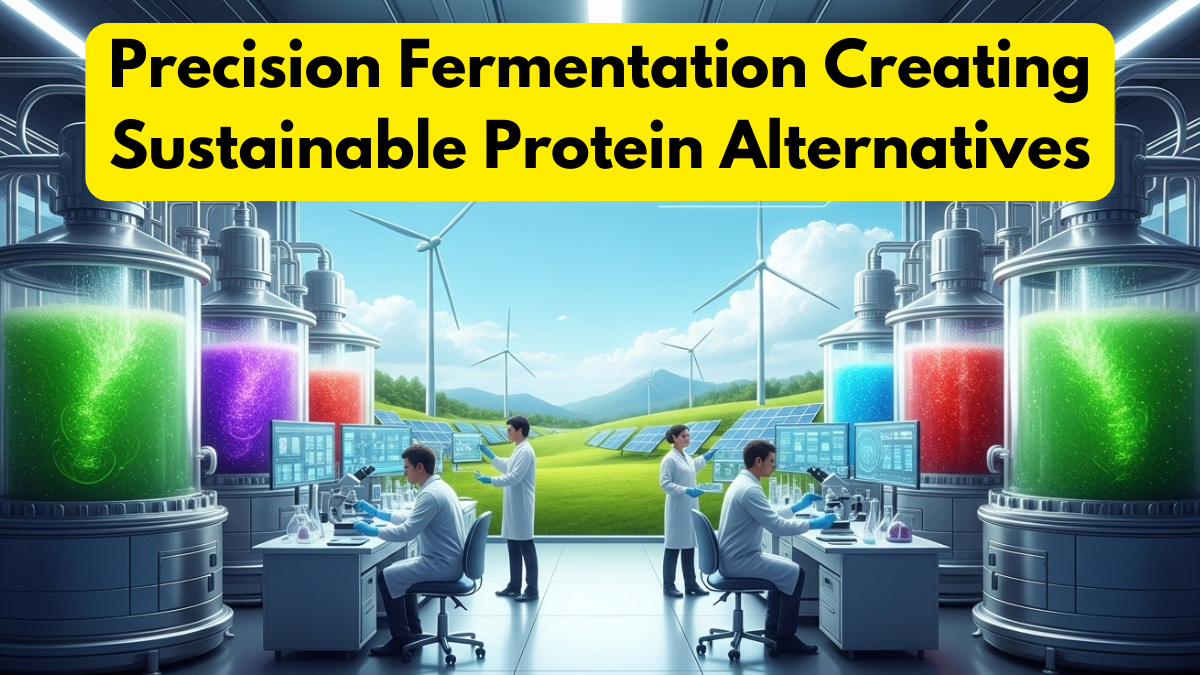
How Precision Fermentation Produces Alternative Proteins
The process of precision fermentation begins with identifying a desired protein or molecule found in nature, such as casein from milk or ovalbumin from eggs. Scientists then insert the genetic instructions for producing that molecule into microorganisms like yeast or fungi. During fermentation, these microbes act as microscopic factories, synthesizing the target ingredient efficiently. Through downstream processing, the protein is purified and incorporated into food products. This food biotech approach allows scalable production of alternative proteins without livestock.
Because precision fermentation produces molecularly identical proteins, the resulting foods can replicate the taste, texture, and functionality of conventional animal products. For example, dairy proteins produced this way can form cheese or yogurt structures similar to traditional milk. This capability distinguishes alternative proteins from plant-based substitutes that rely on different protein structures. As food biotech advances, precision-fermented ingredients are expanding into beverages, baked goods, and nutritional products, enabling sustainable alternatives across food categories.
Key production steps include:
- Gene identification and microbial engineering
- Controlled fermentation and growth
- Protein extraction and purification
- Ingredient formulation and blending
- Food product integration
Sustainability Benefits of Food Biotech and Alternative Proteins
One of the most compelling advantages of precision fermentation is its environmental efficiency compared to animal agriculture. Traditional livestock production requires large land areas, water resources, and feed inputs while generating greenhouse gas emissions. In contrast, food biotech facilities producing alternative proteins use significantly fewer resources and emit less carbon. This makes precision fermentation a key technology for reducing the ecological footprint of food systems.
Another major sustainability benefit is scalability. As global population grows, demand for protein continues to rise. Precision fermentation can produce high-quality alternative proteins in controlled environments independent of climate or land constraints. This resilience enhances food security and supply stability. Additionally, food biotech processes can be optimized for energy efficiency and waste reduction, further strengthening environmental performance. As sustainability standards tighten, precision-fermented foods are expected to play a central role in future diets.
Additional environmental benefits include:
- Reduced land and water use
- Lower greenhouse gas emissions
- No animal welfare concerns
- Consistent production yields
- Minimal agricultural runoff
Technologies Enabling Precision Fermentation
The advancement of precision fermentation depends on multiple scientific and engineering innovations. Synthetic biology enables precise genetic design of microorganisms capable of producing desired proteins. Bioreactor engineering supports large-scale fermentation with optimal growth conditions. Downstream processing technologies ensure purity and safety of alternative proteins for food use. Together, these elements form the technological backbone of modern food biotech manufacturing.
Digital modeling and automation also improve efficiency. Predictive algorithms optimize fermentation conditions and yield, accelerating development of new alternative proteins. Advances in strain engineering enhance productivity and stability of microbial cultures. As infrastructure scales, precision fermentation facilities are becoming more cost-effective and commercially viable. These technological advances are enabling food biotech to compete with traditional protein production at industrial scale.
| Technology Component | Role in Precision Fermentation | Impact on Alternative Proteins |
|---|---|---|
| Synthetic Biology | Engineer microbes for protein production | Expands food biotech capabilities |
| Bioreactor Systems | Control fermentation environment | Scales precision fermentation |
| Downstream Processing | Purify target proteins | Ensures food-grade alternative proteins |
| Strain Optimization | Improve microbial productivity | Enhances efficiency |
| Process Automation | Optimize yields and costs | Accelerates food biotech adoption |
Applications of Precision Fermentation in Food Products
The versatility of precision fermentation allows production of diverse alternative proteins across food categories. Dairy is one of the most advanced applications, with fermentation-derived milk proteins used in cheese, yogurt, and ice cream. These products replicate traditional dairy functionality while being animal-free. Similarly, egg proteins produced through food biotech enable baking and emulsification properties without poultry farming.
Nutritional ingredients and specialty proteins are also expanding applications. Precision fermentation can produce vitamins, enzymes, and functional proteins for fortified foods and supplements. Meat alternatives are incorporating fermentation-derived fats and proteins to improve flavor and texture. As technology matures, alternative proteins created through food biotech will extend into seafood analogs and customized nutrition products. This broad applicability demonstrates the transformative potential of precision fermentation in global food systems.
Emerging product categories include:
- Animal-free dairy products
- Egg protein replacements
- Functional nutrition ingredients
- Meat and seafood alternatives
- Specialty protein supplements
Challenges and Future Outlook for Precision Fermentation
Despite its promise, precision fermentation faces challenges related to cost, regulatory approval, and consumer acceptance. Scaling food biotech production to compete economically with conventional agriculture requires continued technological optimization. Regulatory frameworks for novel alternative proteins vary across regions, influencing market entry timelines. Additionally, public understanding of fermentation-derived foods affects adoption and perception.
However, investment and innovation in precision fermentation are accelerating rapidly. As production scales and costs decline, alternative proteins will become increasingly competitive. Governments and food companies are supporting food biotech as a pathway to sustainable nutrition and climate goals. In the future, precision-fermented ingredients may become standard components of food manufacturing, reducing reliance on animal agriculture while maintaining familiar culinary experiences. The trajectory suggests a major transformation in how proteins are produced and consumed.
Conclusion
The emergence of precision fermentation represents a pivotal shift in food production, enabling sustainable and scalable creation of high-quality alternative proteins through advanced food biotech. By harnessing engineered microorganisms, this technology produces animal-identical proteins with significantly lower environmental impact. From dairy and eggs to functional nutrition ingredients, precision fermentation is expanding possibilities for sustainable diets. As technology advances and adoption grows, precision fermentation is set to redefine global protein supply, supporting healthier populations and a more resilient food system.
FAQs
What is precision fermentation
precision fermentation is a food biotech process that uses engineered microorganisms to produce specific proteins, enabling sustainable alternative proteins without animal agriculture.
How are alternative proteins made using precision fermentation
In precision fermentation, microbes are programmed to produce target proteins which are harvested and used in foods, creating alternative proteins through advanced food biotech methods.
Are precision fermentation foods safe
Products made through precision fermentation undergo purification and safety testing, making alternative proteins produced by food biotech safe for consumption.
What foods use precision fermentation
Dairy alternatives, egg replacements, and functional ingredients often use precision fermentation to create high-quality alternative proteins in food biotech products.
What is the future of precision fermentation
The future of precision fermentation involves large-scale food biotech production of diverse alternative proteins, transforming sustainable food systems worldwide.
Click here to know more.